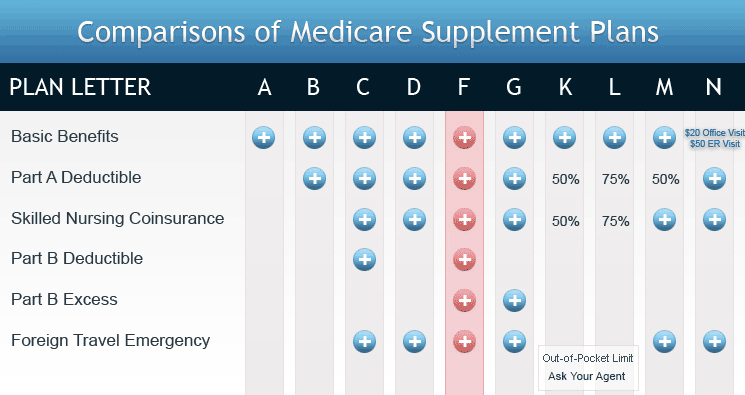
Medicare Supplemental Insurance, also referred to as Medigap, is a type of health insurance program that helps you to pay for the services and treatments which are not covered by your Original Medicare plan (Medicare Part A and Part B). There are ten different standardized plans available. Private insurance companies manage the health care requirements of millions of citizens across the country The Federal Government has standardized all the plans. However, there could be vast differences in the monthly premiums for the exact same insurance coverage. As opposed to the Medicare that provides coverage for both husband and wife, Medicare Supplemental insurance is absolutely personal and each partner has to buy the insurance separately in order to be insured. Our site offers Medicare supplement insurance, both for healthy individuals and for those with pre-existing conditions. We provide instant and free Medicare insurance quotes from more than 59 insurers nationwide. You can choose from the best insurance companies like: United of Omaha, United World, Blue Cross, Gerber Life, Humana and Mutual of Omaha, etc. Who is Eligible for Medicare Supplemental Insurance? You can only be a part of Medicare supplementary insurance when you are enrolled in Medicare Part A and Part B. You need to pay monthly premiums for Part B Medicare as well as an extra premium to the company. We would suggest you to buy a supplemental policy at the time of Open Enrollment Period which is of six month duration; commencing at the start of the month of the applicant's 65th birthday (and each year thereafter), provided they are already receiving Medicare Part B benefits. At the time of Open Enrollment Period, no insurance company can use medical underwriting. This implies that these companies cannot refuse to sell you insurance plans and cannot even charge you more because of your health problems. No company can force you to wait for insurance coverage except when you are suffering from any pre-existing condition. » Read More Benefits of Buying a Medicare Supplemental Insurance Policy With all the options you have for your health insurance, it is essential for you to know how each one works, their Medicare benefits, and your monthly premiums. Following are some of the benefits of buying a Medicare Supplementary Policy: Benefits Match the Changes in Medicare: The benefits of your Medicare Supplemental Policy co-ordinate with the Medicare benefits to help you pay for the health care costs, based on the plan you buy. Stay with your Doctors and Hospitals: When you buy a Medicare Supplemental Plan, you get to pick your own Medicare providers. What more? You don’t even require a referral in case you wish to see a Medical specialist. A Medicare Supplement Policy is Guaranteed Renewable: The good news is that your insurance plan can never be cancelled as long as you keep paying your monthly premiums on time. Receive Medicare Benefits Anytime and Anywhere: You can get Medicare health care services anywhere in the US when you are a part of Medicare Supplement Insurance. Some of the Medicare Supplemental Insurance Plans even provide foreign travel emergency care. » Read More How to Enroll in a Medicare Supplemental Insurance Plan Many top Private Insurance Companies in the United States such as United of Omaha, United World, Blue Cross, Gerber Life, Humana and Mutual of Omaha provide a huge variety of insurance plans, with a very small difference in pricing. BestMedicareSupplement.com can help you in searching the best Medicare Supplement Plan to suit your budget and requirements. We offer free insurance quotes from various Medicare Companies in your zip code as per age, gender, plan and smoking status. » Read More Comparing Medicare Supplemental Insurance Plans and Rates Medicare Supplementary Insurance Plans cost less than you might expect. This is due to the fact that these plans are administered by the state government. So, you can now be sure that all the insurance companies have consistency in their pricing. BestMedicareSupplement.com suggests you to receive insurance quotes from various companies online. You can even call us at (800)960-7702 to find best plans at lowest possible rates. Based on your current health condition and area, we would find you an ideal Medicare supplemental plan. » Read More Medicare Supplement Quotes Medicare Supplement Quotes are very crucial for all the American citizens who are turning 65 this year or are enrolling in for the first time. There are lots of ways in which you can receive free insurance quotes, but the most effective and simplest way is to get in touch with an insurance broker like BestMedicareSupplement.com who is an expert in the field. We promise to provide you a reliable and cheap insurance quotes from multiple Medicare Companies. We also inform our customers about the upcoming changes in Medicare that may affect their present insurance plans. » Read More Popularity Increases for Medicare Supplemental Insurance With a large number of American citizens turning 65 in 2016, the insurance market is all set to flourish. In preparation, Medicare Supplement membership figures for the year 2015 pointed out a growth of approximately 6.9%. At the end of 2015, Medicare Supplemental plans covered about 11 million senior citizens, with 45% opting for Medicare Plan F. It has generated $21.045 billion from the insurance premiums and earned $16.457 in claims paid out in 2015. Of the major insurance companies Mutual of Omaha ranked first with 27% share, rising from 21% in 2015. Gerber Life gained 11% of the total market share. Medigap Plan F – The Most Popular Medicare Supplement Plan Medicare Supplemental Plan F provides insurance coverage for deductibles, co-payments and coinsurance. Medigap Plan F was bought by 46% of the people with Medicare Supplemental coverage in the year 2016. Newly introduced Medicare Plan N gained 158,802 members since June 2010 when it was introduced. Medicare supplement plan F is an excellent option for people who need more expensive medical care to compensate. There is no better substitute to Medigap Plan F and all-in-all; this plan is a compelling option for large numbers of Medicare recipients looking forward to obtain a complete insurance coverage. Medicare Benefits Offered by Medicare Supplement Plan F: - Full coverage of gaps in Medicare
- Zero co-payments, co-insurance and deductibles
- Vast providers network – You get to pick any doctor who approves Medicare
Medigap Plan F is by far the most popular one because of its outstanding coverage and comparatively low premiums. » Read More Pre-Existing Conditions and Medicare Supplemental Insurance In case you are suffering from any pre-existing condition, BestMedicareSupplement.com can provide you coverage and save you big cash over what you are presently paying. Here is the truth: In case you are presently enrolled in a Medicare supplemental plan and have been its part for about six months, then you would easily be covered by a new plan with lower rates. In many cases, BestMedicareSupplement.com can easily provide the coverage for your pre-existing conditions. In a very few situations, one has to wait for a short duration of time. We assure you that we will help you receive proper Medicare Health Care at lowest possible price. Call us now to receive free and instant quotes from different companies in the United States. A Medicare supplementary insurance plan purchased from BestMedicareSupplement.com will give you complete peace of mind of up to 100% insurance coverage at the lowest Medicare supplemental rates possible. Medicare Advantage Plans In addition to Medicare supplement insurance, we are pleased to be expert in the Medicare Advantage market. Medicare Advantage would be an alternative to Original Medicare and a Medicare supplement policy. There are numerous types of Medicare Advantage plans such as PFFS, HMO, PPO, MSA, SNAP, etc. Very strict federal laws regulate the marketing of Medicare Advantage and it is incumbant upon the consumer to initiate the contact with a licensed insurance agent. We would help you to find the lowest rates on Medicare supplement insurance. We provide services in all 50 States and the District of Columbia. » Read More |